



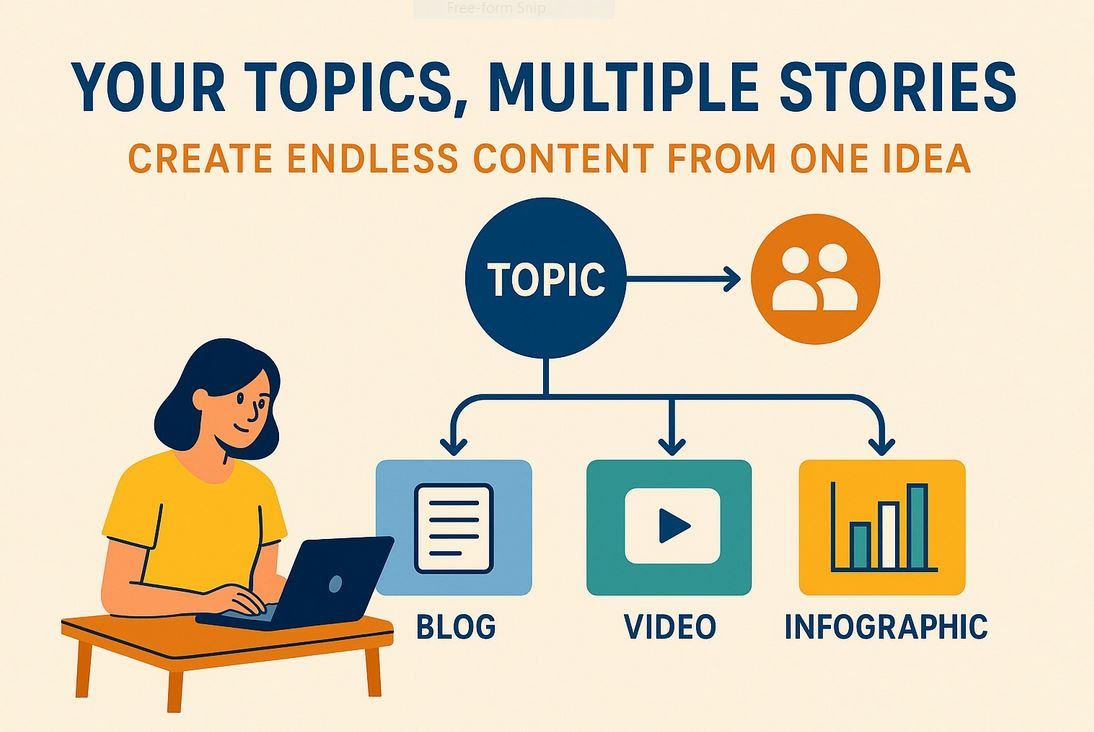
In our modern world, the way we communicate and share ideas has evolved dramatically. Stories have become one of the most powerful tools for expressing thoughts, emotions, and experiences. The idea of “your topics multiple stories” represents the notion that every subject or theme can give rise to many narratives, each with its own perspective, meaning, and impact. Whether in education, writing, media, or personal reflection, exploring multiple stories around a single topic enriches understanding and allows us to see the world from different angles.
This article delves deep into the concept of your topics multiple stories, why they matter, techniques to develop them, and the ways they can transform the way we think, communicate, and connect.
Why Every your topics multiple stories Can Have Multiple Stories
Every your topics multiple stories has layers of complexity that can be told in numerous ways. A single subject, such as “a journey,” “friendship,” or “change,” can lead to countless narratives depending on the perspective, emotion, or experience of the storyteller.
Exploring multiple stories around a your topics multiple stories has several benefits:
- Encourages empathy: Seeing different perspectives allows us to understand the experiences and emotions of others.
- Boosts creativity: Considering multiple ways to tell a story sparks imagination and new ideas.
- Fosters critical thinking: Evaluating different narratives challenges assumptions and deepens comprehension.
- Captures complexity: One story alone rarely covers the full scope of a topic; multiple stories provide depth and nuance.
Characteristics of your topics multiple stories That Generate Multiple Stories
Certain types of topics naturally lend themselves to multiple narratives:
1. Complexity
Complex your topics multiple stories, such as human relationships, social issues, or personal growth, can be explored from various angles. Each aspect of the your topics multiple stories—emotional, practical, historical, or cultural—can lead to a distinct story.
2. Emotional Depth
your topics multiple stories that evoke strong emotions, such as love, loss, or triumph, often generate multiple stories. Different individuals may react differently to the same event, resulting in diverse interpretations.
3. Cultural and Social Relevance
Culturally significant topics provide opportunities for multiple stories shaped by tradition, society, or community norms. For example, the concept of “home” may inspire stories of belonging, migration, family, or personal discovery.
4. Timelessness
Endurig your topics multiple stories like courage, ambition, or hope are relevant across generations. Each person, culture, or era may approach these themes differently, creating endless narrative possibilities.
Techniques to Develop Multiple Stories Around a your topics multiple stories
Developing multiple stories from a single your topics multiple stories requires creativity, structure, and perspective. Here are key techniques:
1. Shift the Perspective
One of the simplest ways to create multiple stories is to change the point of view:
- From the perspective of a main character
- From the perspective of a secondary character
- From the perspective of an outsider or observer
Each perspective brings unique insights, emotions, and details, transforming a single event into multiple stories.
2. Explore Different Timeframes
Stories can be set in the past, present, or future. Each timeframe adds depth and diversity:
- Past: Provides historical context and reflection
- Present: Captures immediate experiences and emotions
- Future: Imagines possibilities, consequences, or alternative realities
3. Emphasize Different Emotions or Themes
A single topic can highlight different emotions, each telling a distinct story. For example, the topic “a storm” can inspire:
- A story of survival and courage
- A metaphor for personal struggles
- A tale of societal change or upheaval
4. Use Various Genres
Applying different genres allows the same topic to generate multiple narratives:
- Drama: Focuses on relationships and emotional growth
- Comedy: Explores humor, irony, or absurdity
- Mystery or Thriller: Introduces suspense and tension
- Fantasy or Science Fiction: Adds imaginative or symbolic layers
5. Experiment With Mediums
Stories can be told through various mediums, each offering a unique perspective:
- Written narratives or essays
- Visual storytelling through art, film, or photography
- Audio storytelling through podcasts or music
- Interactive experiences, such as games or simulations
By combining multiple mediums, a single topic can produce a rich array of narratives.
Applications in Education
The concept of your topics | multiple stories is especially valuable in education. Encouraging students to explore multiple narratives:
- Enhances critical thinking and analytical skills
- Promotes empathy by understanding different viewpoints
- Supports interdisciplinary learning by connecting themes across subjects
- Inspires creativity and independent thought
For instance, when studying historical events, students can write stories from the perspectives of different participants, social classes, or communities. They may analyze how the same event affected people differently, fostering a deeper understanding of history.
Applications in Media and Journalism
In journalism and media, multiple stories provide depth and balance:
- Covering a single event from multiple perspectives ensures a comprehensive understanding
- Highlighting the impact on various communities helps reduce bias
- Comparing past and present narratives provides context and insight
- Including expert analysis or alternative interpretations enriches the story
Journalists who embrace multiple stories can provide more nuanced reporting and engage their audience in meaningful ways.
Applications in Creative Writing
For writers, generating multiple stories around a topic improves creativity and storytelling:
- Character-Driven Exploration: Develop stories from the viewpoints of different characters
- Parallel Narratives: Interweave stories that intersect or contrast
- Alternative Endings: Imagine different outcomes for the same event
- Theme-Based Stories: Explore multiple themes like love, betrayal, courage, or redemption using the same starting point
This approach allows writers to expand their imagination, experiment with structure, and produce richer narratives.
Personal Growth Through Multiple Stories
Exploring multiple stories is also a tool for personal growth and self-reflection:
- Self-Understanding: Rewriting personal experiences from different angles provides new insights
- Problem Solving: Considering multiple narratives can reveal alternative solutions
- Empathy Development: Seeing events from other people’s perspectives strengthens compassion
- Emotional Processing: Creating stories about life events helps process feelings and experiences
For example, reflecting on a challenging period may produce stories highlighting resilience, humor, personal growth, and lessons learned—all from the same experience.
Challenges in Managing Multiple Stories
While multiple stories offer richness, they also present challenges:
- Information Overload: Too many narratives can become confusing if not organized
- Contradictory Accounts: Different stories may conflict, requiring careful consideration
- Communication Complexity: Conveying multiple stories clearly takes skill
- Bias and Selection: Choosing which stories to tell may introduce personal bias
Awareness and thoughtful organization can overcome these challenges, making multiple stories a powerful tool rather than a source of confusion.
Organizing Multiple Stories
To handle multiple stories effectively:
- Use Story Maps: Visualize relationships and intersections between narratives
- Group by Themes: Organize stories by emotion, lesson, or perspective
- Chronological Order: Arrange stories based on timeline
- Medium-Based Organization: Separate narratives by written, visual, or audio formats
- Audience Consideration: Determine which stories resonate most with specific audiences
Effective organization ensures clarity, coherence, and engagement when presenting multiple stories.
Broader Implications of Multiple Stories
Embracing multiple narratives has implications beyond storytelling:
- Social Understanding: Encourages cultural awareness and respect for diversity
- Conflict Resolution: Helps identify underlying motivations and common ground
- Innovation: Offers new perspectives and approaches in business, education, and art
- Historical Insight: Provides a fuller understanding of events by including multiple viewpoints
Multiple stories reflect the richness of human experience and remind us that a single perspective rarely captures the full picture.
Conclusion
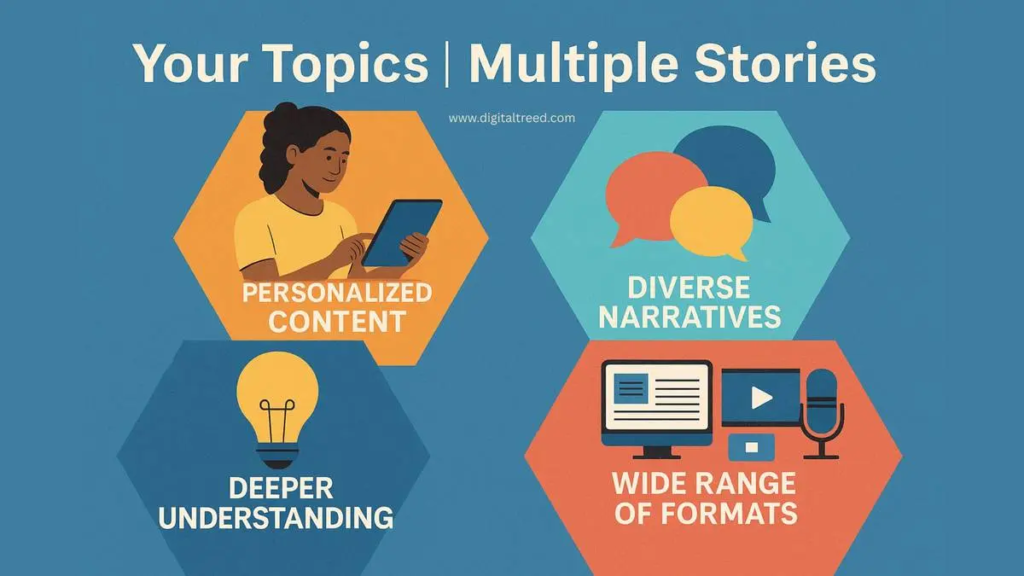
The idea of your topics multiple stories highlights the limitless possibilities of storytelling. Every topic, no matter how simple, contains layers of meaning that can be expressed through diverse narratives. Embracing multiple stories allows us to:
- Foster empathy and understanding
- Enhance creativity and critical thinking
- Deepen learning and education
- Improve personal reflection and self-awareness
- Strengthen communication, media, and journalism
Creating multiple stories requires imagination, careful thought, and structure, but it ultimately produces richer, more meaningful narratives. Each story adds depth, perspective, and insight, making communication more engaging and comprehensive.
In a world where understanding multiple perspectives is increasingly important, exploring multiple stories around your topics is not just a creative exercise—it is a way to connect, learn, and grow. Every topic can be the starting point for countless stories, and every story can reveal something new about ourselves and the world around us.
