



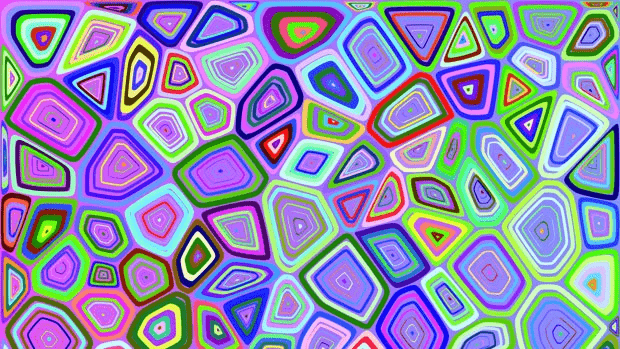
Have you ever looked closely at the skin of a giraffe or the wings of a dragonfly and noticed those amazing natural patterns? Nature is full of clever shapes, and one of the coolest math secrets behind them is called the diagrama de voronoi. Imagine you have a big sheet of paper and you drop a handful of seeds all over it. If you draw fences around each seed so that every single spot on the paper belongs to the closest seed, you get a special map of puzzle pieces. This neat math trick helps us understand how space gets shared out evenly. It looks just like a web of cozy little rooms, and scientists use it every day to solve tricky puzzles about the world around us. Let’s dive in and explore how this neat pattern works in real life!
Table of Contents
What is a Diagrama de Voronoi?
At its heart, a diagrama de voronoi is simply a way to chop up a big space into smaller regions based on a set of starting points. Think of it like living in a big town where everyone wants to shop at the nearest grocery store. Every store draws an invisible boundary around itself, claiming all the houses that are closest to it. Mathematicians call these starting points seeds, sites, or generators. When you connect the boundary lines, you get a wonderful geometric map that looks like cracked mud or turtle shell patterns. It is a brilliant way to map out distances and territories without any guessing involved. This simple idea turns messy spaces into clean, organized neighborhoods.
How Math Creates These Special Shapes
Building a diagrama de voronoi sounds complicated, but the math rules behind it are actually very simple and logical. First, you pick a few random dots on a blank page to serve as your main anchor points. Next, you measure the straight-line distance from any random blank spot on the paper to your anchor dots. You color that blank spot based on whichever anchor dot is closest to it. When you do this for every single pixel or point on the paper, distinct borders naturally appear right where two dots share equal distance. Computers can calculate these sharp geometric lines in a split second, creating stunning visual maps that look like modern art.
Voronoi Patterns All Around in Nature
You do not need a computer to find a diagrama de voronoi because nature builds them everywhere for free all the time. Look closely at the dried-up mud in a puddle on a hot summer day and you will see the soil cracking into these exact shapes. Giraffe skin, corn kernels, and the tiny cells on the surface of a leaf also follow this exact geometric layout. Nature uses this smart pattern because it is the most efficient way to pack things tightly together while sharing space equally. It proves that plants and animals use clever math tricks to grow strong and healthy without wasting any precious room.
Amazing Uses in Video Games and Graphics
Game developers and computer artists use the diagrama de voronoi to build realistic worlds for you to play in every single day. If a game needs to generate a massive, rocky mountain range, procedural generation tools use these geometric formulas to shape the terrain. It helps create natural-looking stone textures, sparkling crystal formations, and even shattered glass effects when something breaks on screen. Animators also use these math maps to make realistic explosions, flowing water, and wispy clouds that move naturally. Without this clever geometry, your favorite digital worlds would look stiff, fake, and boring instead of rich and immersive.
City Planning and Finding Nearest Stores
City planners rely heavily on the diagrama de voronoi when they need to decide where to build vital public services for towns. Imagine a city council trying to figure out where to place new fire stations, hospitals, or emergency rescue centers. By mapping out the population using these spatial regions, planners can make sure every neighborhood has quick access to help. It guarantees that no single area is left too far away from essential support when seconds matter most. This smart geographic layout keeps cities running smoothly, safely, and fairly for every single family living there.
How Phone Signals Use Voronoi Cells
Did you know your mobile phone relies on a diagrama de voronoi every time you make a call or send a text message? Cell phone towers are scattered across cities and towns like seeds on a map, broadcasting signals to nearby mobile devices. Your phone automatically connects to the closest tower to give you the clearest signal and fastest internet speeds possible. As you ride in a car, your phone smoothly switches from one tower’s digital territory to the next without dropping your call. This seamless handoff keeps you connected to your friends no matter where you travel in the city.
Fun Art and Design Projects to Try
Artists and designers love using the diagrama de voronoi to make striking modern jewelry, lampshades, and unique architectural building facades. Because the pattern looks organic yet futuristic, it adds an instant touch of cool style to everyday objects and fashion pieces. You can even find online generators where you drop digital points on a screen to craft your own custom coloring pages. It is a fantastic way to blend strict mathematical rules with wild human creativity to make something truly unique. Next time you design a poster, try adding these geometric webs for an eye-catching modern look.
Comparing Voronoi with Other Math Shapes
People often confuse the diagrama de voronoi with standard grids, checkerboards, or triangle meshes, but it has very unique superpowers. Regular grids force everything into rigid, boring squares that rarely match how messy things happen in the real world. Triangles are great for 3D computer models, but Voronoi polygons focus entirely on neighborhood dominance and closest distances. Each polygon inside the map stretches or shrinks naturally to wrap around its central seed point perfectly. This flexibility makes it much more powerful than basic geometric shapes when studying natural growth and spatial planning.
Fun Facts About Georgy Voronoy
The brilliant mathematician behind the diagrama de voronoi was a Ukrainian scholar named Georgy Voronoy who lived long ago. Back in 1908, he wanted to understand complex numbers and space deeper, so he invented these amazing diagrams to help explain his ideas. Even though he created them for pure mathematics, he probably never guessed how helpful they would be for modern computers. Today, scientists, programmers, and artists all over the globe use his brilliant historical concepts to build our high-tech future. It just goes to show how one curious mind can change the way we look at the entire universe!
| Feature / Aspect | Diagrama de Voronoi Details |
|---|---|
| Core Definition | Splitting a plane into regions based on the closest distance to specific seed points. |
| Primary Inventor | Georgy Voronoy, a Ukrainian mathematician who formalized the concept in 1908. |
| Natural Examples | Giraffe skin patterns, cracked dry mud, insect wings, and corn kernels. |
| Tech Applications | Procedural terrain generation in video games, cellular network tower mapping, and computer graphics. |
| Practical Uses | Emergency service placement, urban planning, store locators, and architecture. |
| Visual Style | Organic, web-like polygon networks that look both mathematical and artistic. |
Frequently Asked Questions
What is a simple way to explain a diagrama de voronoi?
It is a way to divide a map into different zones where every single spot belongs to the closest starting dot. Think of it like drawing fences around houses so each house claims the closest park.
Who invented the diagrama de voronoi?
A famous mathematician named Georgy Voronoy invented these special geometric patterns back in the year 1908 to solve advanced math problems about numbers and space.
Where can we see these patterns in real life?
You can spot them easily in nature by looking at giraffe skin, turtle shells, cracked mud in dry fields, dragonfly wings, and the cell structures inside plant leaves.
How do video games use these diagrams?
Game developers use these math patterns to build realistic mountains, create shattered glass effects, and design natural-looking landscapes for players to explore safely.
Why are these diagrams important for cell phones?
Cell phone towers use these spatial regions to figure out which tower is closest to your phone so you get a strong, clear signal everywhere you go.
Can I make my own Voronoi pattern at home?
Yes! You can draw a few dots on a piece of paper, use a ruler to connect them, and draw perpendicular lines halfway between them to build your own custom map.
Conclusion
Exploring the wonderful world of the diagrama de voronoi shows us how simple math rules can create breathtaking patterns in nature and technology. From helping cell phone towers keep you connected to shaping stunning video game worlds, this clever geometry touches almost everything we use daily. Why not try drawing your own custom map with a few dots on a blank page today? Share your cool creations with friends or leave a comment below telling us where you spotted your favorite natural pattern!
