



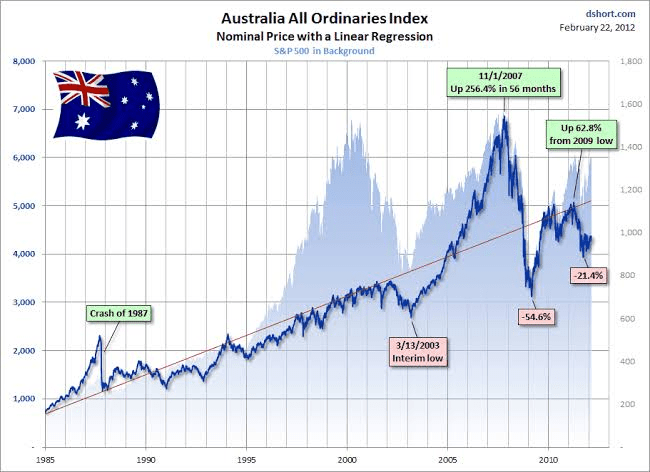
Have you ever wondered how the Australian stock market works? Financial news channels mention numbers and trends every day. One phrase pops up constantly: the all ords.
Understanding the stock market can feel like learning a whole new language. However, tracking market growth is much easier than it looks. The all ords index acts as a giant thermometer for money in Australia. When it goes up, businesses are generally growing well. When it drops, companies are facing temporary challenges.
Let us break down what this famous term means in plain English. You will learn why investors watch the all ords closely. We will cover its history, its key features, and how everyday people use it to make better financial decisions.
Table of Contents
All Ords Overview Table
| Fact Detail | Quick Summary |
| Full Name | All Ordinaries Index |
| Market Ticker | XAO |
| Start Date | January 1, 1980 |
| Base Index Value | 500 points |
| Number of Companies | 500 top ASX companies |
| Market Coverage | Over 95% of Australian shares |
| Main Operator | S&P Dow Jones Indices & ASX |
| Rebalance Frequency | Once per year (Annually) |
What Is the All Ords Index?
The all ords is short for the All Ordinaries Index. It is the oldest and most famous stock market list in Australia. It tracks 500 of the largest public businesses across the nation.
Think of this list like a school report card for Australian commerce. Instead of grading one single student, it grades 500 major players at once. When these businesses make strong sales, the combined score moves higher.
Because it includes so many companies, the all ords covers over 95% of Australia’s equity market value. This broad spread gives investors a full snapshot of the national economy in real-time.
History and Background of the ASX All Ordinaries
The Australian Stock Exchange launched the all ords back in January 1980. Before this date, regional cities had separate stock exchanges with different numbers. Leaders wanted one main index to track national growth smoothly.
When it started, the system set a baseline score of 500 points. That baseline made it super easy to measure long-term wealth building. If the index reaches 5,000 points, the market value has grown tenfold.
Over the decades, the index witnessed major booms and painful crashes. It survived global market drops, mining booms, and economic shifts. Through every event, the all ords remained a trusted historical reference.
How Does the All Ords Work?
The calculation behind the all ords uses a system called market weighting. Bigger businesses have a stronger impact on the score than smaller firms.
Market capitalization measures the total money value of all company shares combined. For instance, a giant bank worth billions influences the all ords far more than a small regional store.
When share prices shift throughout the trading day, the index updates instantly. This live score tells traders whether overall market mood is positive or negative.
Top Sectors Inside the All Ords
The all ords holds 500 firms, but two main industries dominate the list. Financial services and natural resources make up a giant portion of the total value.
Big retail banks handle money for millions of households, holding heavy index weight. Meanwhile, massive mining and energy producers export iron, gold, and gas across the world.
Other sectors include healthcare providers, telecom networks, tech builders, and grocery chains. This rich variety means the all ords reflects many parts of daily Australian life.
Difference Between All Ords and S&P/ASX 200
New investors often mix up the all ords with another famous benchmark called the ASX 200. While both track Australian businesses, key differences set them apart.
The all ords tracks 500 stocks and updates its roster once every year. It includes large firms, mid-sized operations, and smaller companies. It measures pure overall market size.
The ASX 200 tracks only the top 200 liquid companies and updates every quarter. Fund managers prefer using the ASX 200 for trading financial products like exchange-traded funds.
Why Do Investors Track the All Ords?
Tracking the all ords helps people see general trends without reading hundreds of individual financial reports every morning. It simplifies vast economic data into one single readable score.
Superannuation funds store retirement savings for millions of workers across Australia. Many of these managed funds use broad indices to balance long-term investment portfolios safely.
When you follow the index regularly, you spot economic cycles early. It gives clear clues on when consumer confidence is rising or when markets face economic pressure.
How Companies Get Included in the Index
A company cannot simply pay money to join the famous all ords list. Entry strictly depends on rules managed by S&P Dow Jones Indices.
To qualify, a firm must list its shares on the Australian Securities Exchange. It must rank among the top 500 largest businesses by total share market value.
Every March, index managers review every company on the exchange. Successful growing firms get added to the list, while shrinking companies drop off to make room.
Understanding Total Return vs Price Index
When looking at the standard all ords quote, you only see changes in share prices. That standard number ignores dividend payouts made to happy shareholders.
Australia has a rich culture of companies paying strong corporate cash dividends. A regular share price view leaves out significant overall cash earnings over long periods.
Financial experts use a secondary measurement called the All Ordinaries Total Return Index. This version adds dividend returns back into the score, showing real total wealth growth.
Benefits and Risks of Investing in Market Stocks
Investing in companies within the all ords can build long-term wealth. Historical records show stock markets generally rise over extended multi-year periods.
| Benefits | Risks |
| Broad exposure to 500 leading companies | Short-term market crashes and price drops |
| Earn cash dividends from corporate profits | Heavy reliance on mining and banking sectors |
| Keeps pace with economic growth over time | Global events can cause sudden panics |
Smart investors reduce risks by holding investments for many years. Spreading money across different industries helps protect savings during unexpected market drops.
How Everyday Beginners Can Invest in Australia
You cannot buy direct shares in the all ords index itself. Because it is a calculated mathematical measure, it acts as a guide rather than a tradable stock.
However, beginners can easily invest in similar broad index funds or ETFs. These low-cost funds purchase shares in hundreds of underlying businesses on your behalf.
Opening a regulated brokerage account takes only a few minutes today. By setting up automated monthly deposits, regular workers can build impressive wealth alongside national economic growth.
Frequently Asked Questions
What does all ords stand for?
It stands for the All Ordinaries Index, which is the main benchmark for Australian shares.
How many companies are in the all ords index?
The index includes the 500 largest companies listed on the Australian Securities Exchange.
What is the ticker symbol for the index?
The official three-letter exchange ticker symbol used on financial platforms is XAO.
Does the index include dividends?
The standard index tracks stock prices only, but the Total Return version includes dividend payments.
