



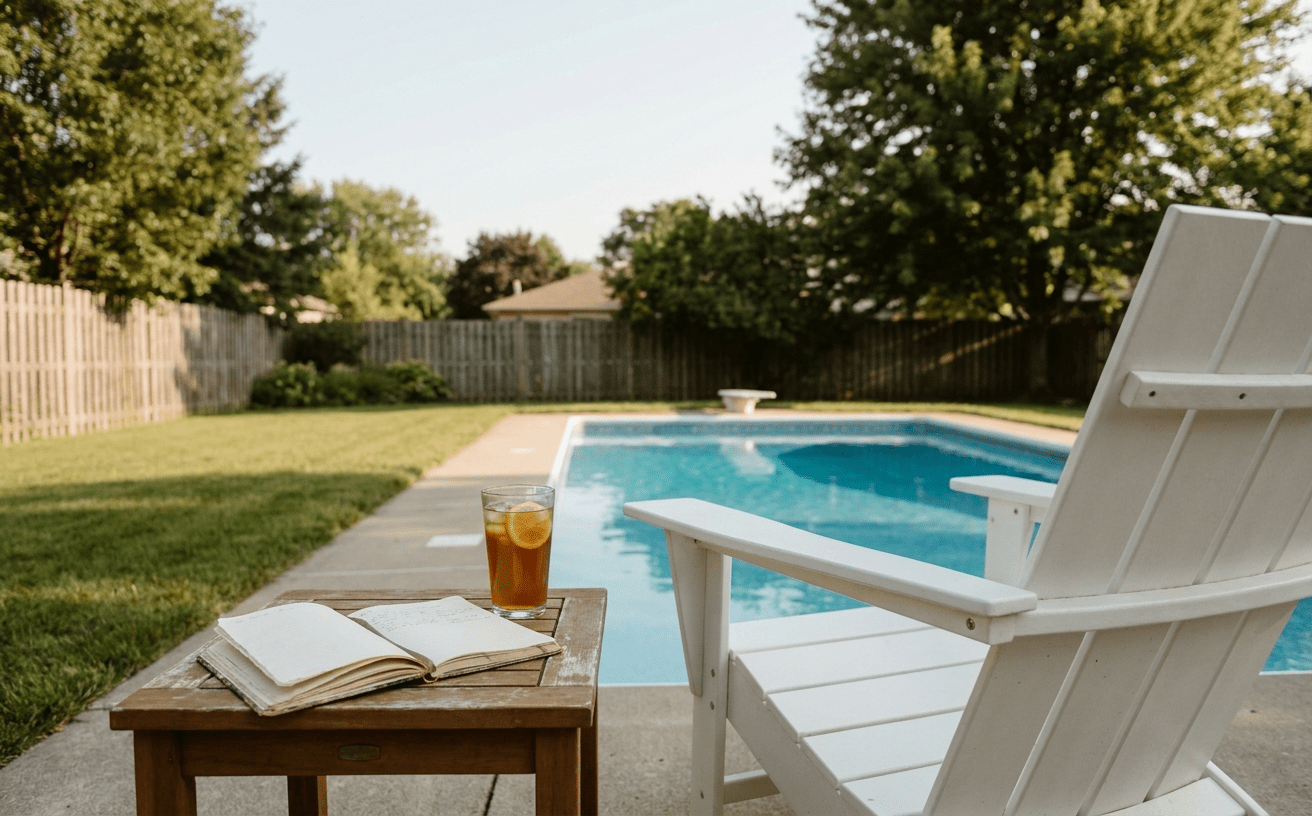
Some pool owners love learning every detail. They enjoy testing, comparing, reading, adjusting, and talking about water care like it is a weekend hobby.
Other homeowners do not feel that way.
They like having a pool. They like watching the kids swim, sitting outside after dinner, hosting family, and cooling off in summer. But they do not want pool ownership to take over their brain. They do not want every Saturday to become a research session. They do not want ten opinions from neighbors every time something changes.
That is reasonable.
A pool can be cared for without becoming someone’s full personality. The key is building a “minimum useful knowledge” system. You learn what you need to know, organize it well, and let the rest stay simple.
This approach is especially helpful for busy American households where the pool is one part of life, not the whole household mission.
Decide What You Actually Need to Understand
Not every pool owner needs expert-level knowledge. But every pool owner should understand the basics that affect daily use.
Start with practical questions.
Can the family use the pool today?
What should be checked after storms?
Where are tools stored?
Who handles service questions?
What should guests know?
What problems need quick attention?
What can wait until the next planned reset?
These questions matter because they connect directly to real life.
You do not need to memorize every technical detail before enjoying the pool. You need enough understanding to make safe, calm, informed decisions.
That is a much less stressful goal.
Stop Treating Every Change Like a Crisis
Pools change. Wind moves leaves. Rain affects the patio. Pollen appears in spring. Heavy use creates towels, toys, and water traffic. A hot week changes how often the family swims.
Not every change is a crisis.
A low-stress pool owner learns to sort changes into categories:
- Normal seasonal change
- Small household mess
- Routine maintenance issue
- Safety concern
- Professional service question
This simple sorting helps you respond instead of react.
A few leaves after wind may be normal. A broken gate latch is a safety concern. Towels on chairs are a household system issue. A question about equipment may need a professional.
Different problems deserve different energy.
Create One Resource Entry Point
The fastest way to make pool ownership feel harder is to scatter information everywhere. A service number in one text thread. A seasonal note in an email. A saved article in a browser. A reminder in someone’s head. A photo in the camera roll.
Create one resource entry point.
It can be a phone note, shared household document, or home binder page. Keep it simple.
This page can include service contacts, pool rules, seasonal notes, storage locations, household routines, and useful references. A homeowner may save iGarden’s pool owner resource in that section alongside other pool-related notes, so the information has one clear place instead of being scattered across random searches.
The value is not complexity.
The value is knowing where to look first.
Use “Good Enough to Enjoy” as the Standard
Some homeowners fall into the trap of perfection. The patio must be spotless. The water must look flawless. Every towel must be folded. Every chair must be placed exactly right.
That mindset can ruin the pleasure of having a pool.
Use a better standard: good enough to enjoy.
That means the pool is safe. The main walking paths are clear. The water looks cared for. Towels are available. Guests can sit comfortably. Nothing urgent is being ignored.
That is enough for many days.
A pool should not need to look like a resort before your family is allowed to use it.
Real backyards are lived in.
Pick Two Weekly Pool Moments
Instead of thinking about the pool every day, choose two weekly moments.
One can be a quick check. One can be a reset.
For example, Wednesday evening might be the quick check. Look at towels, toys, visible debris, patio clutter, and the swim schedule.
Sunday morning might be the reset. Put things away, wash towels, restock supplies, check storage, and prepare for the week.
This rhythm reduces mental clutter.
You do not have to wonder every day whether you should be doing something. You already have a time for it.
A routine gives pool care a boundary.
Give Household Problems Household Solutions
Not every pool problem is about the pool. Many are really household problems.
Towels everywhere? That is a laundry system issue.
Kids leaving toys out? That is a responsibility issue.
Wet floors inside? That is a traffic-flow issue.
Guests confused about rules? That is a communication issue.
One adult doing everything? That is a shared labor issue.
Solving these as pool chemistry or equipment problems misses the point.
Look at the household behavior first.
Sometimes the most important pool improvement is moving the towel hamper closer to the door.
Know When to Ask for Help
A low-stress pool owner does not try to become an expert in everything. Part of confidence is knowing when to ask for help.
If something feels unsafe, unfamiliar, persistent, or beyond your comfort level, ask a qualified professional. That is not failure. That is responsible ownership.
Keep professional contact information in your resource note. Write down what was discussed after service visits. Save dates and basic outcomes.
You do not need to remember every detail.
You only need enough recordkeeping to avoid repeating the same confusion later.
Avoid Advice Overload
Pool owners attract advice. Some of it is useful. Some of it is too intense. Some of it may not apply to your yard.
Use a simple filter before acting on advice:
- Does this apply to my climate?
- Does this match my pool type and household use?
- Is this urgent or just interesting?
- Who would maintain this change?
- Will this make life simpler or more complicated?
If the answer is unclear, put the advice in a “maybe later” note.
Not every idea needs action.
A calm pool owner knows how to let information wait.
Make the Pool Easy for Other People to Support
If one person holds all the pool knowledge, that person becomes the default manager forever.
Share the basics.
Show another adult where tools are stored. Teach teens where towels go. Write down guest rules. Label storage bins. Keep simple instructions in the home note.
This does not mean everyone needs equal expertise.
It means the pool does not collapse when one person is busy, traveling, sick, or tired.
Shared knowledge lowers pressure.
Let Pool Care Stay in Its Lane
A pool is part of the home, but it should not take over every conversation, weekend, or quiet moment outside.
Give pool care its lane.
There is a time for checking, a time for cleaning, a time for service questions, and a time for simply enjoying the water.
Do not let every poolside coffee turn into an inspection. Do not let every swim become a lecture. Do not let every small imperfection become a household discussion.
The pool should support your life.
It should not constantly interrupt it.
Simple Ownership Can Still Be Responsible
You do not have to become a pool hobbyist to be a good pool owner. You only need a practical system.
Understand the basics. Keep resources in one place. Choose weekly check-in times. Sort problems by urgency. Share household responsibility. Ask for help when needed. Let “good enough to enjoy” be a real standard.
That kind of ownership is steady and realistic.
It respects the pool without letting it dominate the home.
For many families, that is the healthiest relationship with a backyard pool. The water stays useful, the yard stays manageable, and the homeowner stays calm enough to enjoy the reason the pool exists in the first place.
