




Tommy Walsh has long been one of the most recognisable faces — and voices — on British television. For decades, audiences have associated him with practical know-how, straight-talking advice, and a distinctly working-class charm that made him stand out in the world of home improvement television. Alongside his on-screen presence, his voice became a defining feature: confident, grounded, and unmistakably authentic.
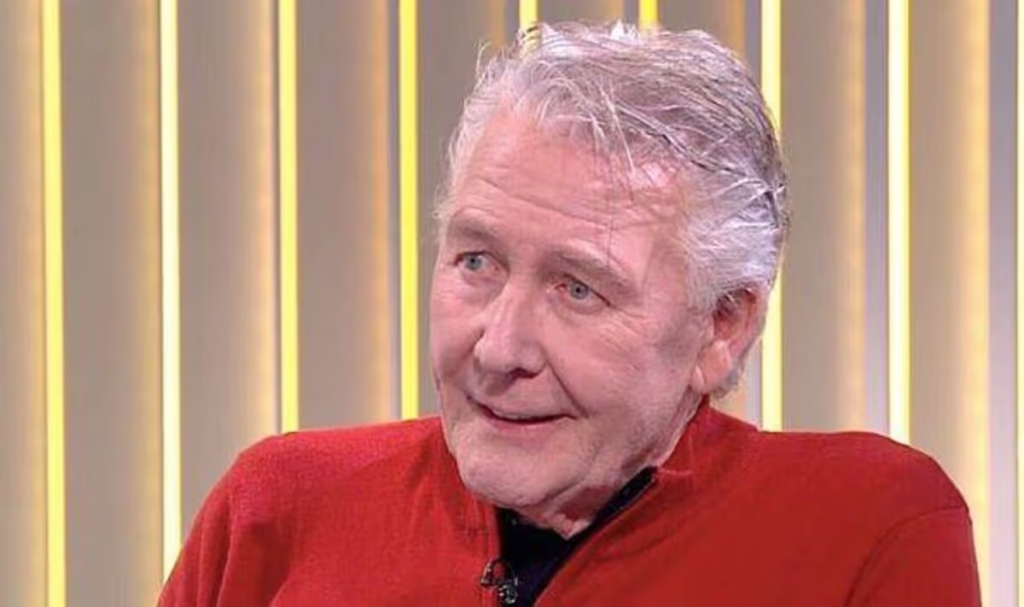
In recent years, however, many viewers have begun discussing what they describe as a “Tommy Walsh voice change.” Fans watching newer television appearances or interviews have commented that he sounds different from how they remember him in earlier programmes. This observation has sparked curiosity, speculation, and broader discussions about why voices change over time — especially when they belong to public figures who have been part of people’s lives for decades.
This article explores the topic of tommy walsh voice change in depth. It looks at why people notice changes, how voices naturally evolve, how television and memory affect perception, and why a familiar voice carries such emotional weight for audiences.
The Importance of tommy walsh voice change to His Public Image
To understand why people notice even subtle differences in tommy walsh voice change, it helps to understand the role his voice played in his career. From the start, Walsh was not presented as a polished television personality in the traditional sense. Instead, he was relatable — a builder who spoke plainly and clearly, without unnecessary embellishment.
His voice communicated:
- Practical authority
- Approachability
- Trustworthiness
- Experience
For many viewers, his voice felt reassuring. When he explained how to fix a problem or renovate a space, it felt as though advice was coming from someone who genuinely knew what they were doing — not just a presenter reading a script. Over time, this created a strong association between tommy walsh voice change and reliability.
When a voice becomes part of someone’s identity like this, any perceived change — even a small one — becomes noticeable.
What People Mean When They Say “Tommy Walsh Voice Change”
When fans talk about a “tommy walsh voice change,” they are rarely suggesting something sudden or dramatic. Instead, most observations fall into a few general categories:
- tommy walsh voice change sounds slightly deeper or rougher
- His speech pace feels slower or more deliberate
- His tone appears calmer or more reflective
- There is less of the sharp, energetic delivery heard in earlier shows
These impressions often come from comparisons between older television programmes and more recent appearances. Viewers who grew up watching him during the height of his career naturally compare the version they remember with the one they see today.
Importantly, these observations are subjective. They are shaped by memory, expectation, and emotional attachment as much as by actual vocal change.
Why Voices Naturally Change Over Time
One of the most important points in any discussion about voice change is this: all voices change. The human voice is produced by physical structures — vocal cords, muscles, lungs, and resonance spaces — all of which evolve over time.
Aging and the Voice
As people age, several changes can occur:
- Vocal cords may lose some elasticity
- Muscle strength in the throat can decrease
- Breath support may change
- Resonance in the chest and mouth may shift
These changes can result in a voice that sounds:
- Slightly deeper or lower
- More textured or gravelly
- Less forceful than before
This process is gradual and often unnoticed by the speaker themselves. For public figures like Tommy Walsh, however, audiences are uniquely positioned to notice these shifts because they can compare recordings from different decades.
The Role of Health and Life Experience
Life experiences also shape how a person speaks. Stress, illness, fatigue, and emotional challenges can all influence voice quality. Even periods of rest, reduced workload, or lifestyle changes can subtly alter how someone sounds.
For someone who has spent years speaking loudly on construction sites, filming outdoors, and projecting their voice for television, wear and tear is normal. The voice is a muscle system — it reflects how it has been used.
It’s also worth noting that people often speak differently later in life, not because they can’t speak as they once did, but because they don’t feel the need to. Confidence, experience, and maturity often lead to a calmer, more measured delivery.
Television Production and Sound Perception
Another major factor in the perception of a “voice change” is how television sound is produced.
Then vs. Now
Older television programmes were recorded and mixed differently than modern ones. Changes in:
- Microphone technology
- Sound editing techniques
- Broadcasting standards
- Home television speakers
can all make voices sound different, even when the speaker is using the same tone and volume.
A voice recorded in the 1990s and played on a modern television will not sound identical to a voice recorded today using high-definition equipment. These technical differences alone can create the illusion of change.
Different Shows, Different Speaking Styles
Tommy Walsh has appeared in a wide range of television formats. Some required high energy and fast pacing, while others encouraged a more relaxed, conversational approach.
For example:
- Renovation challenge shows demand urgency and assertiveness
- Property shows often involve calm narration
- Interviews tend to reveal a softer, more reflective tone
When audiences compare clips from these different contexts, they may assume the voice has changed, when in reality the delivery has adapted to the format.
Memory, Nostalgia, and Emotional Perception
Human memory plays a surprisingly large role in how we perceive voices.
People don’t remember voices like audio recordings. Instead, they remember:
- How a voice made them feel
- The context in which they heard it
- The life stage they were in at the time
If someone watched Tommy Walsh on television during their childhood or early adulthood, his voice becomes linked to those memories. When they hear him again years later, the contrast between past emotion and present reality can feel like a bigger change than it actually is.
This is why nostalgia often magnifies perceived differences.
Why Fans Care So Much About His Voice
The reason the topic of Tommy Walsh’s voice change generates interest is simple: people care.
His voice represents:
- A familiar presence
- A connection to classic television
- A symbol of practical knowledge and honesty
When a voice like that changes — even slightly — it reminds viewers that time is passing. That awareness can be emotional, reflective, and even comforting.
Rather than signaling loss, a changing voice often represents continuity: the same person, shaped by experience.
Public Figures and the Myth of Permanence
Audiences sometimes expect public figures to remain frozen in time. When someone has been on television for decades, viewers subconsciously expect them to look, sound, and behave as they always have.
But this expectation isn’t realistic. Voices evolve just like faces, careers, and perspectives. In many ways, the fact that Tommy Walsh still sounds recognisably like himself — despite any subtle differences — speaks to the strength of his identity.
Has Tommy Walsh’s Voice Really Changed?
The most accurate answer is that his voice has evolved, not disappeared or transformed into something unrecognisable.
Key points to consider:
- Any change has been gradual
- His voice remains distinctly his
- Differences are subtle rather than dramatic
- Perception plays a major role
What people are noticing is likely the combination of age, experience, production changes, and shifting delivery styles — not a sudden or unnatural alteration.
A Voice That Reflects a Life Lived
If anything, the discussion around Tommy Walsh’s voice change highlights something positive: his longevity. Few television personalities remain relevant long enough for audiences to compare different phases of their voice across decades.
A voice shaped by time tells a story. It reflects years of work, challenges faced, knowledge gained, and lessons learned. In that sense, any evolution in tommy walsh voice change adds depth rather than diminishing its value.

Conclusion
The topic of “Tommy Walsh voice change” is less about loss and more about understanding how voices — like people — grow and adapt over time. While fans may notice differences between early appearances and more recent ones, these changes are natural, expected, and deeply human.
tommy walsh voice change still carries the qualities that made him a household name: authenticity, clarity, and warmth. What may have shifted is not the essence of the voice, but the life experience behind it.
Ultimately, tommy walsh voice change remains a symbol of trust and familiarity — not because it stayed the same forever, but because it evolved alongside him.
